

Ephesians 2:4 – 5
But because of his great love for us, God, who is rich in mercy, made us alive with Christ even when we were dead in transgressions—it is by grace you have been saved.
Exploring Wesleyan Grace: Prevenient, Justifying, and Sanctifying Grace
In Tuesday’s devotional, I referenced John Wesley’s belief in prevenient grace—the grace that affirms God’s love for all as first and always. This means that God chooses to love us unconditionally. Prevenient grace is the assurance that God’s love is extended to everyone, without requirement or condition, and is freely given before we ever respond.
Today, we revisit what Wesley describes as Justifying Grace. This refers to the moment when we fully acknowledge and accept God’s call in our lives. It is the point at which we recognize God for the love that God is and choose to respond.
At this moment, we realize that we are called to live a life that is distinct from the rest of the world. We learn to love God in return for all that God has freely given us. This marks the beginning of the first and greatest commandment: to love God with all our heart, soul, and mind. The decision to love God is a choice made freely, but once it is made, it transforms our outlook on life forever.
On Tuesday, we will explore the third form of grace Wesley discusses—sanctification. Through prevenient and justifying grace, we are drawn to become a new creation, inspired by God’s love.
But because of his great love for us, God, who is rich in mercy, made us alive with Christ even when we were dead in transgressions—it is by grace you have been saved.
Exploring Wesleyan Grace: Prevenient, Justifying, and Sanctifying Grace
In Tuesday’s devotional, I referenced John Wesley’s belief in prevenient grace—the grace that affirms God’s love for all as first and always. This means that God chooses to love us unconditionally. Prevenient grace is the assurance that God’s love is extended to everyone, without requirement or condition, and is freely given before we ever respond.
Today, we revisit what Wesley describes as Justifying Grace. This refers to the moment when we fully acknowledge and accept God’s call in our lives. It is the point at which we recognize God for the love that God is and choose to respond.
At this moment, we realize that we are called to live a life that is distinct from the rest of the world. We learn to love God in return for all that God has freely given us. This marks the beginning of the first and greatest commandment: to love God with all our heart, soul, and mind. The decision to love God is a choice made freely, but once it is made, it transforms our outlook on life forever.
On Tuesday, we will explore the third form of grace Wesley discusses—sanctification. Through prevenient and justifying grace, we are drawn to become a new creation, inspired by God’s love.

Titus 2:11 (The Message)
God’s readiness to give and forgive is now public. Salvation’s available for everyone!
God’s Unconditional Love and Our Calling as Disciples
John Wesley emphasizes a profound truth that is essential for us to remember: God loves all of creation. This love extends to everyone and everything, without exception. There are no requirements or preconditions that must be fulfilled to receive God’s love; it is freely given to all.
As disciples of Christ, we are called to mirror God’s love in the world. This means loving our neighbors with the same prevenient love that God offers us—love that is genuine, unconditional, and freely given. Our love for others should reflect the grace God shows to each of us.
Jesus teaches us to love and pray for our enemies. By embodying such love and grace, we open ourselves to experiencing God’s own love and grace. Only through this genuine and unconditional love can we fully understand and share in the divine compassion that God offers.
God’s readiness to give and forgive is now public. Salvation’s available for everyone!
God’s Unconditional Love and Our Calling as Disciples
John Wesley emphasizes a profound truth that is essential for us to remember: God loves all of creation. This love extends to everyone and everything, without exception. There are no requirements or preconditions that must be fulfilled to receive God’s love; it is freely given to all.
As disciples of Christ, we are called to mirror God’s love in the world. This means loving our neighbors with the same prevenient love that God offers us—love that is genuine, unconditional, and freely given. Our love for others should reflect the grace God shows to each of us.
Jesus teaches us to love and pray for our enemies. By embodying such love and grace, we open ourselves to experiencing God’s own love and grace. Only through this genuine and unconditional love can we fully understand and share in the divine compassion that God offers.

Proverbs 20:7
“A righteous person acts with integrity; his children who come after him will be happy.”
Modeling Integrity and Compassion in Parenting
Continuing with the Father’s Day theme, it is important to recognize that teaching our children about integrity involves more than just speaking about it. Our actions must consistently reflect the values we wish to instill. By aligning our words and deeds, we create an environment that nurtures honor and truthfulness, preparing our children to become adults who value these principles.
Reflecting on my own experience, I am reminded of how my father modeled compassion and grace throughout his life. He always managed to do the right thing and ensured it was done in the right way. This example played a crucial role in shaping the person I have become. As I raise my own children, I strive to follow his lead, loving God by showing love and respect to all others.
“A righteous person acts with integrity; his children who come after him will be happy.”
Modeling Integrity and Compassion in Parenting
Continuing with the Father’s Day theme, it is important to recognize that teaching our children about integrity involves more than just speaking about it. Our actions must consistently reflect the values we wish to instill. By aligning our words and deeds, we create an environment that nurtures honor and truthfulness, preparing our children to become adults who value these principles.
Reflecting on my own experience, I am reminded of how my father modeled compassion and grace throughout his life. He always managed to do the right thing and ensured it was done in the right way. This example played a crucial role in shaping the person I have become. As I raise my own children, I strive to follow his lead, loving God by showing love and respect to all others.

𝐄𝐩𝐡𝐞𝐬𝐢𝐚𝐧𝐬 𝟔:𝟒
𝐅𝐚𝐭𝐡𝐞𝐫𝐬, 𝐝𝐨 𝐧𝐨𝐭 𝐩𝐫𝐨𝐯𝐨𝐤𝐞 𝐲𝐨𝐮𝐫 𝐜𝐡𝐢𝐥𝐝𝐫𝐞𝐧 𝐭𝐨 𝐚𝐧𝐠𝐞𝐫, 𝐛𝐮𝐭 𝐛𝐫𝐢𝐧𝐠 𝐭𝐡𝐞𝐦 𝐮𝐩 𝐢𝐧 𝐭𝐡𝐞 𝐝𝐢𝐬𝐜𝐢𝐩𝐥𝐢𝐧𝐞 𝐚𝐧𝐝 𝐢𝐧𝐬𝐭𝐫𝐮𝐜𝐭𝐢𝐨𝐧 𝐨𝐟 𝐭𝐡𝐞 𝐋𝐨𝐫𝐝.
Reflections on Parenting and God’s Guidance
As we approach Father’s Day, I am reminded of the significant challenges parents face today. The world is filled with many pitfalls that can lead our children away from God’s vision of hope, love, and peace for everyone. However, instead of dwelling on the negative influences that seek to draw us into darkness, let us turn our attention to the goodness that God has placed in this world. By focusing on what is positive and God-given, we can guide our children toward the light and encouragement that comes from faith.
The scripture chosen for today begins with the instruction: “do not provoke.” When any of us make mistakes, it is difficult to admit our faults, and it can be even more challenging when others continuously point out our shortcomings. This is why it is important to make a clear distinction between discipline and punishment. Punishment focuses on the mistake that was made and the consequences that follow. While acknowledging errors and consequences is necessary, if we stop there, the opportunity for positive growth is lost.
Instead, we should use discipline as a form of instruction. Through discipline, a young person can learn from their errors and gain the tools and understanding needed to avoid making similar mistakes in the future. Discipline rooted in love and guidance encourages growth and transformation, rather than resentment or shame.
True learning never happens without mistakes. Even Jesus understood this as he taught his disciples, and the Spirit of God continues to work in each of us in this way today. Recognizing the inevitability of mistakes allows us to lead with grace and forgiveness. God’s grace and forgiveness are the foundation for how we should guide all of God’s children, helping them move toward the light and love of God. By modeling forgiveness and grace, we foster an environment where growth, healing, and deepened faith are possible for everyone.
𝐅𝐚𝐭𝐡𝐞𝐫𝐬, 𝐝𝐨 𝐧𝐨𝐭 𝐩𝐫𝐨𝐯𝐨𝐤𝐞 𝐲𝐨𝐮𝐫 𝐜𝐡𝐢𝐥𝐝𝐫𝐞𝐧 𝐭𝐨 𝐚𝐧𝐠𝐞𝐫, 𝐛𝐮𝐭 𝐛𝐫𝐢𝐧𝐠 𝐭𝐡𝐞𝐦 𝐮𝐩 𝐢𝐧 𝐭𝐡𝐞 𝐝𝐢𝐬𝐜𝐢𝐩𝐥𝐢𝐧𝐞 𝐚𝐧𝐝 𝐢𝐧𝐬𝐭𝐫𝐮𝐜𝐭𝐢𝐨𝐧 𝐨𝐟 𝐭𝐡𝐞 𝐋𝐨𝐫𝐝.
Reflections on Parenting and God’s Guidance
As we approach Father’s Day, I am reminded of the significant challenges parents face today. The world is filled with many pitfalls that can lead our children away from God’s vision of hope, love, and peace for everyone. However, instead of dwelling on the negative influences that seek to draw us into darkness, let us turn our attention to the goodness that God has placed in this world. By focusing on what is positive and God-given, we can guide our children toward the light and encouragement that comes from faith.
The scripture chosen for today begins with the instruction: “do not provoke.” When any of us make mistakes, it is difficult to admit our faults, and it can be even more challenging when others continuously point out our shortcomings. This is why it is important to make a clear distinction between discipline and punishment. Punishment focuses on the mistake that was made and the consequences that follow. While acknowledging errors and consequences is necessary, if we stop there, the opportunity for positive growth is lost.
Instead, we should use discipline as a form of instruction. Through discipline, a young person can learn from their errors and gain the tools and understanding needed to avoid making similar mistakes in the future. Discipline rooted in love and guidance encourages growth and transformation, rather than resentment or shame.
True learning never happens without mistakes. Even Jesus understood this as he taught his disciples, and the Spirit of God continues to work in each of us in this way today. Recognizing the inevitability of mistakes allows us to lead with grace and forgiveness. God’s grace and forgiveness are the foundation for how we should guide all of God’s children, helping them move toward the light and love of God. By modeling forgiveness and grace, we foster an environment where growth, healing, and deepened faith are possible for everyone.

Ephesians 3:20
Now to him who is able to do immeasurably more than all we ask or imagine, according to his power that is at work within us,
Many of us have been influenced by the notion that we should strive to accomplish everything on our own. Society often teaches that asking for assistance is a sign of weakness. However, this belief is misleading. Even at the very beginning of creation, God provided a helper, emphasizing the importance of partnership. Ecclesiastes 4:9a highlights this truth: Two are better than one, because they have a good return for their labor:
There are many things in life that we cannot achieve by ourselves. When we receive help, what seemed impossible becomes possible. Including God as the foundation and guiding force transforms our efforts, allowing us to accomplish what would otherwise be unattainable. Through this process, we discover that God's creation is fundamentally about community and service. We find our greatest fulfillment and joy when we pursue God's purpose for our lives alongside those He has placed around us, working together in harmony.
Now to him who is able to do immeasurably more than all we ask or imagine, according to his power that is at work within us,
Many of us have been influenced by the notion that we should strive to accomplish everything on our own. Society often teaches that asking for assistance is a sign of weakness. However, this belief is misleading. Even at the very beginning of creation, God provided a helper, emphasizing the importance of partnership. Ecclesiastes 4:9a highlights this truth: Two are better than one, because they have a good return for their labor:
There are many things in life that we cannot achieve by ourselves. When we receive help, what seemed impossible becomes possible. Including God as the foundation and guiding force transforms our efforts, allowing us to accomplish what would otherwise be unattainable. Through this process, we discover that God's creation is fundamentally about community and service. We find our greatest fulfillment and joy when we pursue God's purpose for our lives alongside those He has placed around us, working together in harmony.
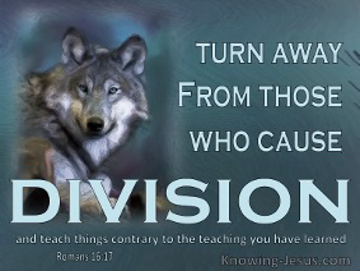
Romans 16:17 – 18
I urge you, brothers and sisters, to watch out for those who cause divisions and put obstacles in your way that are contrary to the teaching you have learned. Keep away from them. For such people are not serving our Lord Christ, but their own appetites. By smooth talk and flattery, they deceive the minds of naive people.
When considering whom to trust and follow as leaders, it is important to reflect on the model of leadership that Jesus exemplified. Jesus sought to draw all people toward the love of God. In his first sermon, he highlighted the qualities of those blessed by God—specifically the meek, the merciful, and the peacemakers. These attributes are essential in identifying the kind of leader we should follow. Unfortunately, there are times when the forces of evil in this world use individuals who act in opposition to these principles, leading us away from the teachings of our Lord and Savior, Jesus.
It is necessary for each of us to pause and consider whether the people we follow are bringing us closer to God. We must ask ourselves: Are those we celebrate guiding us to love our neighbors as ourselves, as Jesus taught? Do they uphold the Wesley Principle of “first, do no harm”? If they do, we should follow their lead. However, if leaders promote division, fear, hatred, or malice toward others, we must examine whether they are leading us away from the Spirit of God. The will of God is to bring love and peace into this world and anything that works contrary to that is not of God.
I urge you, brothers and sisters, to watch out for those who cause divisions and put obstacles in your way that are contrary to the teaching you have learned. Keep away from them. For such people are not serving our Lord Christ, but their own appetites. By smooth talk and flattery, they deceive the minds of naive people.
When considering whom to trust and follow as leaders, it is important to reflect on the model of leadership that Jesus exemplified. Jesus sought to draw all people toward the love of God. In his first sermon, he highlighted the qualities of those blessed by God—specifically the meek, the merciful, and the peacemakers. These attributes are essential in identifying the kind of leader we should follow. Unfortunately, there are times when the forces of evil in this world use individuals who act in opposition to these principles, leading us away from the teachings of our Lord and Savior, Jesus.
It is necessary for each of us to pause and consider whether the people we follow are bringing us closer to God. We must ask ourselves: Are those we celebrate guiding us to love our neighbors as ourselves, as Jesus taught? Do they uphold the Wesley Principle of “first, do no harm”? If they do, we should follow their lead. However, if leaders promote division, fear, hatred, or malice toward others, we must examine whether they are leading us away from the Spirit of God. The will of God is to bring love and peace into this world and anything that works contrary to that is not of God.

Romans 2:1 (ESV)
Therefore, you have no excuse, O man, every one of you who judges. For in passing judgment on another you condemn yourself, because you, the judge, practice the very same things.
Humility and humbleness are essential qualities for anyone striving to walk the path of righteousness. Jesus, though the Son of God and flawless in every respect, chose to serve others rather than seek recognition or status. Throughout his ministry, Jesus spent time with those whom society considered the lowest—sinners and outcasts. Despite their reputations, he never disparaged or demeaned them. Instead, he shared meals with tax collectors, provided for those in need without passing judgment, and even offered an adulteress woman the “living water” before she confessed her sins.
To be a genuine disciple of Christ, we must first acknowledge our own sinfulness. It is only through God’s grace and love that we are saved, not by any merit of our own. Therefore, we should refrain from judging others, remembering the teaching to “not judge others lest ye be judged.” We are called to remove the plank from our own eye before attempting to take the speck from another’s. True followers of Jesus demonstrate love by accepting others despite their faults and serving them wherever and whenever possible, just as God loves us. This is the way disciples fulfill the command to love God—by loving their neighbors.
Therefore, you have no excuse, O man, every one of you who judges. For in passing judgment on another you condemn yourself, because you, the judge, practice the very same things.
Humility and humbleness are essential qualities for anyone striving to walk the path of righteousness. Jesus, though the Son of God and flawless in every respect, chose to serve others rather than seek recognition or status. Throughout his ministry, Jesus spent time with those whom society considered the lowest—sinners and outcasts. Despite their reputations, he never disparaged or demeaned them. Instead, he shared meals with tax collectors, provided for those in need without passing judgment, and even offered an adulteress woman the “living water” before she confessed her sins.
To be a genuine disciple of Christ, we must first acknowledge our own sinfulness. It is only through God’s grace and love that we are saved, not by any merit of our own. Therefore, we should refrain from judging others, remembering the teaching to “not judge others lest ye be judged.” We are called to remove the plank from our own eye before attempting to take the speck from another’s. True followers of Jesus demonstrate love by accepting others despite their faults and serving them wherever and whenever possible, just as God loves us. This is the way disciples fulfill the command to love God—by loving their neighbors.

Matthew 22:37 – 40
37 Jesus replied: “‘Love the Lord your God with all your heart and with all your soul and with all your mind.’[c] 38 This is the first and greatest commandment. 39 And the second is like it: ‘Love your neighbor as yourself.’[d] 40 All the Law and the Prophets hang on these two commandments.”
When reflecting on Jesus’s words in Matthew 22:37–40, I am struck by the profound impact these two commandments could have on our world if we truly lived them out. Imagine how much better life would be if we allowed God’s love to flow through us to others, just as God pours His love into our lives.
Yet, loving God presents a challenge. We cannot see God, and this makes it difficult for us to know how to express our love for Him. Often, the love we try to offer is marked by selfishness and is transactional at best. This falls short of the agape love Jesus describes—a pure, unconditional love that expects nothing in return.
So, how do we love God? The answer lies in loving our neighbors. We demonstrate our love for God by placing the needs of others ahead of our own and acting for their benefit, not for what we might receive in return. This kind of love is rare today, as society often encourages us to compete for limited resources, including love itself. There is a fear that if we do not claim our share first, there may not be enough left for us.
But this thinking is flawed. Those who believe serve an infinite God, whose love knows no bounds. Because God’s love for us is limitless, we should never restrict our love for others. Only when we embrace this truth can we love others fully—and in doing so, fulfill the commandment to love God with all our heart, soul, and mind.
37 Jesus replied: “‘Love the Lord your God with all your heart and with all your soul and with all your mind.’[c] 38 This is the first and greatest commandment. 39 And the second is like it: ‘Love your neighbor as yourself.’[d] 40 All the Law and the Prophets hang on these two commandments.”
When reflecting on Jesus’s words in Matthew 22:37–40, I am struck by the profound impact these two commandments could have on our world if we truly lived them out. Imagine how much better life would be if we allowed God’s love to flow through us to others, just as God pours His love into our lives.
Yet, loving God presents a challenge. We cannot see God, and this makes it difficult for us to know how to express our love for Him. Often, the love we try to offer is marked by selfishness and is transactional at best. This falls short of the agape love Jesus describes—a pure, unconditional love that expects nothing in return.
So, how do we love God? The answer lies in loving our neighbors. We demonstrate our love for God by placing the needs of others ahead of our own and acting for their benefit, not for what we might receive in return. This kind of love is rare today, as society often encourages us to compete for limited resources, including love itself. There is a fear that if we do not claim our share first, there may not be enough left for us.
But this thinking is flawed. Those who believe serve an infinite God, whose love knows no bounds. Because God’s love for us is limitless, we should never restrict our love for others. Only when we embrace this truth can we love others fully—and in doing so, fulfill the commandment to love God with all our heart, soul, and mind.

Ephesians 2:8 – 9 (The Message)
Saving is all his idea, and all his work. All we do is trust him enough to let him do it. It’s God’s gift from start to finish!
As I wrote on Tuesday, Jesus was sent into the world to save it—and to save you. As humans, we are flawed individuals who often struggle to overcome our own limitations. The evil present in this world has influenced us, turning us into selfish and self-centered beings, which is far from what we were created to be. In truth, we were created in the image of God, and that image is love. There are moments when each of us discovers our true, loving selves. Yet, there are also times when we fail to live up to the purpose for which we were created, falling short of embodying God’s love.
It is the grace of God that makes our salvation possible. God willingly sacrificed His only child for you, and because of this, He forgives your failures. God’s ultimate desire is for you to learn to love as He loves, guiding you toward the hope, peace, and joy for which you were created. So, continue to work toward the perfect love in which you were created, striving for perfection. At the same time, accept God’s grace in your shortcomings, trusting that as you pursue this perfect love, forgiveness and growth are always available.
Saving is all his idea, and all his work. All we do is trust him enough to let him do it. It’s God’s gift from start to finish!
As I wrote on Tuesday, Jesus was sent into the world to save it—and to save you. As humans, we are flawed individuals who often struggle to overcome our own limitations. The evil present in this world has influenced us, turning us into selfish and self-centered beings, which is far from what we were created to be. In truth, we were created in the image of God, and that image is love. There are moments when each of us discovers our true, loving selves. Yet, there are also times when we fail to live up to the purpose for which we were created, falling short of embodying God’s love.
It is the grace of God that makes our salvation possible. God willingly sacrificed His only child for you, and because of this, He forgives your failures. God’s ultimate desire is for you to learn to love as He loves, guiding you toward the hope, peace, and joy for which you were created. So, continue to work toward the perfect love in which you were created, striving for perfection. At the same time, accept God’s grace in your shortcomings, trusting that as you pursue this perfect love, forgiveness and growth are always available.

James 1:19 – 20
My dear brothers and sisters, take note of this: Everyone should be quick to listen, slow to speak and slow to become angry, because human anger does not produce the righteousness that God desires.
If we truly applied the wisdom of James, we would begin by making a conscious effort to listen carefully and attentively. Too often, during conversations or discussions, our focus shifts toward preparing our own responses rather than genuinely hearing what the other person is expressing. This tendency becomes even more pronounced when we are passionate about the topic at hand, leading us to prioritize our own viewpoints over understanding others.
However, to love as God commands, we are called to practice active listening. This involves not only hearing the words spoken by others but also striving to understand their perspectives—the experiences and feelings that shape their point of view. By doing so, we cultivate empathy, allowing ourselves to connect with others on a deeper level and appreciate their unique circumstances.
When we invite God’s Spirit to guide our interactions, we are empowered to shift from destructive patterns of communication to constructive dialogue. Even if disagreements remain unresolved, we play a vital role in ensuring that situations do not escalate or worsen. As followers of Christ, our calling is to be peacemakers—those who bridge gaps and foster understanding.
Achieving this requires us to listen with love and respect for everyone, embodying the example set by Jesus. Through compassionate listening, we can create spaces of peace, healing, and connection, fulfilling our calling to reflect God’s love in our relationships with others.
My dear brothers and sisters, take note of this: Everyone should be quick to listen, slow to speak and slow to become angry, because human anger does not produce the righteousness that God desires.
If we truly applied the wisdom of James, we would begin by making a conscious effort to listen carefully and attentively. Too often, during conversations or discussions, our focus shifts toward preparing our own responses rather than genuinely hearing what the other person is expressing. This tendency becomes even more pronounced when we are passionate about the topic at hand, leading us to prioritize our own viewpoints over understanding others.
However, to love as God commands, we are called to practice active listening. This involves not only hearing the words spoken by others but also striving to understand their perspectives—the experiences and feelings that shape their point of view. By doing so, we cultivate empathy, allowing ourselves to connect with others on a deeper level and appreciate their unique circumstances.
When we invite God’s Spirit to guide our interactions, we are empowered to shift from destructive patterns of communication to constructive dialogue. Even if disagreements remain unresolved, we play a vital role in ensuring that situations do not escalate or worsen. As followers of Christ, our calling is to be peacemakers—those who bridge gaps and foster understanding.
Achieving this requires us to listen with love and respect for everyone, embodying the example set by Jesus. Through compassionate listening, we can create spaces of peace, healing, and connection, fulfilling our calling to reflect God’s love in our relationships with others.
