

Jeremiah 29:11
"For I know the plans I have for you," declares the Lord, "plans to prosper you and not to harm you, plans to give you hope and a future."
Looking Back and Moving Forward
In our current era, it is common to reminisce about what we consider the "good old days." As time passes, just like athletes, our perception of past accomplishments tends to grow. An above-average player might recall themselves as the star who secured the victory. This tendency does not belittle our memories of the past; however, when individuals or societies begin to long for what once was, they risk losing sight of the progress and opportunities that lie ahead. Much of this longing is rooted in humanity's fear of the unknown.
The scripture for today reminds us that God's intention is for His creation to flourish. Although we may not always perceive the path that God has set before us, we are called to trust in His plan. Instead of yearning for the past or clinging to the present, we should embrace the future with excitement. Through the love and sacrifice of Jesus, humanity has already achieved victory. For all who believe, the greatest blessings are still ahead.
"For I know the plans I have for you," declares the Lord, "plans to prosper you and not to harm you, plans to give you hope and a future."
Looking Back and Moving Forward
In our current era, it is common to reminisce about what we consider the "good old days." As time passes, just like athletes, our perception of past accomplishments tends to grow. An above-average player might recall themselves as the star who secured the victory. This tendency does not belittle our memories of the past; however, when individuals or societies begin to long for what once was, they risk losing sight of the progress and opportunities that lie ahead. Much of this longing is rooted in humanity's fear of the unknown.
The scripture for today reminds us that God's intention is for His creation to flourish. Although we may not always perceive the path that God has set before us, we are called to trust in His plan. Instead of yearning for the past or clinging to the present, we should embrace the future with excitement. Through the love and sacrifice of Jesus, humanity has already achieved victory. For all who believe, the greatest blessings are still ahead.
Romans 8:24 – 25
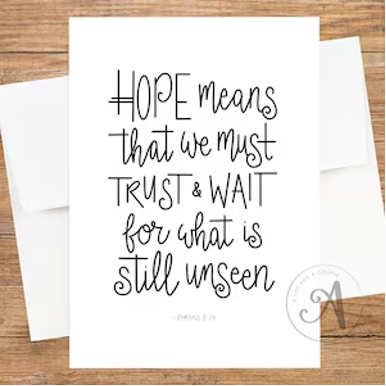
24 For in this hope we were saved. But hope that is seen is no hope at all. Who hopes for what they already have? 25 But if we hope for what we do not yet have, we wait for it patiently.
Looking Forward with Hope
Reflecting on these verses brings up an important question: should our hope be rooted in the past, or should we look ahead to the future? Many people today long for a return to a time they believe was better than the present. However, if our hope is grounded in God through Jesus, we are called to look forward, not backward. The past should not be romanticized; it was a time filled with both good and bad experiences. We must celebrate the good moments, learn from mistakes, and keep our hearts and minds open to the blessings God has planned for us in the days ahead.
God has made promises to all who believe. Our hope rests in our faith that we serve a God whose infinite love is steadfast and unchanging. If we remain patient and trust in God, we will ultimately receive the full measure of the blessings God has promised.
24 For in this hope we were saved. But hope that is seen is no hope at all. Who hopes for what they already have? 25 But if we hope for what we do not yet have, we wait for it patiently.
Looking Forward with Hope
Reflecting on these verses brings up an important question: should our hope be rooted in the past, or should we look ahead to the future? Many people today long for a return to a time they believe was better than the present. However, if our hope is grounded in God through Jesus, we are called to look forward, not backward. The past should not be romanticized; it was a time filled with both good and bad experiences. We must celebrate the good moments, learn from mistakes, and keep our hearts and minds open to the blessings God has planned for us in the days ahead.
God has made promises to all who believe. Our hope rests in our faith that we serve a God whose infinite love is steadfast and unchanging. If we remain patient and trust in God, we will ultimately receive the full measure of the blessings God has promised.

Proverbs 19:1
Better is a poor person who walks in his integrity than one who is crooked in speech and is a fool.
The Value of Integrity
In today’s society, integrity often goes unrecognized and undervalued. The prevailing belief is that success is determined by the accumulation of wealth and power. While this perspective may hold true in the material world, it leads many people into a relentless pursuit of money and influence. Those who become consumed by this cycle ultimately sacrifice their very existence, allowing evil to prevail in their lives.
God, through Jesus, offers an alternative path—a way of living where success is not measured by possessions or dominance, but by the love that is shared and received. When individuals use these gifts, God has granted them to improve the lives of others, they experience a sense of peace with the world. Those who adopt the world’s values may never grasp this concept and often view those who follow God’s command to love their neighbor as foolish. In reality, it is they who are foolish, because they miss out on the profound joy that comes from serving God by serving others.
Better is a poor person who walks in his integrity than one who is crooked in speech and is a fool.
The Value of Integrity
In today’s society, integrity often goes unrecognized and undervalued. The prevailing belief is that success is determined by the accumulation of wealth and power. While this perspective may hold true in the material world, it leads many people into a relentless pursuit of money and influence. Those who become consumed by this cycle ultimately sacrifice their very existence, allowing evil to prevail in their lives.
God, through Jesus, offers an alternative path—a way of living where success is not measured by possessions or dominance, but by the love that is shared and received. When individuals use these gifts, God has granted them to improve the lives of others, they experience a sense of peace with the world. Those who adopt the world’s values may never grasp this concept and often view those who follow God’s command to love their neighbor as foolish. In reality, it is they who are foolish, because they miss out on the profound joy that comes from serving God by serving others.

Luke 12:15
15 Then he said to them, “Watch out! Be on your guard against all kinds of greed; life does not consist in an abundance of possessions.”
Serving God or Possessions?
Our society often equates success with the accumulation of possessions. We find ourselves constantly striving for more—larger homes, newer cars, and expanded bank accounts. This relentless pursuit leads us to question: When will we be satisfied? The truth is, living in a state of greed and excess offers no peace. When we depend solely on our own efforts and material gains, we lose sight of faith in God.
It is important to recognize that everything we possess is a gift from God. Our blessings are meant to be used in service to others. Genuine peace and joy, as promised through Christ, are found when we serve out of selfless, agape love. By becoming servants to those around us, we experience God’s grace in its truest form.
15 Then he said to them, “Watch out! Be on your guard against all kinds of greed; life does not consist in an abundance of possessions.”
Serving God or Possessions?
Our society often equates success with the accumulation of possessions. We find ourselves constantly striving for more—larger homes, newer cars, and expanded bank accounts. This relentless pursuit leads us to question: When will we be satisfied? The truth is, living in a state of greed and excess offers no peace. When we depend solely on our own efforts and material gains, we lose sight of faith in God.
It is important to recognize that everything we possess is a gift from God. Our blessings are meant to be used in service to others. Genuine peace and joy, as promised through Christ, are found when we serve out of selfless, agape love. By becoming servants to those around us, we experience God’s grace in its truest form.

James 1:16 – 18 (NIV)
Don’t be deceived, my dear brothers and sisters. Every good and perfect gift is from above, coming down from the Father of the heavenly lights, who does not change like shifting shadows. He chose to give us birth through the word of truth, that we might be a kind of firstfruits of all he created.
Recognizing the Source of Our Blessings
Today’s devotional serves as an important reminder for our daily lives: all good gifts come from God. It is essential to remember that everything we receive, every blessing and every joy, originates from the divine. This truth encourages us to maintain a heart of gratitude and awareness of God’s presence in our everyday experiences.
God blesses us each day in countless ways. Yet, amid the rush and busyness of our lives, we often fail to notice these blessings or do not recognize them when they come. Despite this, God’s greatest blessing to us is the gift of love—our ability to love others and, in turn, to be loved.
Don’t be deceived, my dear brothers and sisters. Every good and perfect gift is from above, coming down from the Father of the heavenly lights, who does not change like shifting shadows. He chose to give us birth through the word of truth, that we might be a kind of firstfruits of all he created.
Recognizing the Source of Our Blessings
Today’s devotional serves as an important reminder for our daily lives: all good gifts come from God. It is essential to remember that everything we receive, every blessing and every joy, originates from the divine. This truth encourages us to maintain a heart of gratitude and awareness of God’s presence in our everyday experiences.
God blesses us each day in countless ways. Yet, amid the rush and busyness of our lives, we often fail to notice these blessings or do not recognize them when they come. Despite this, God’s greatest blessing to us is the gift of love—our ability to love others and, in turn, to be loved.

Colossians 3:12 – 14
Therefore, as God’s chosen people, holy and dearly loved, clothe yourselves with compassion, kindness, humility, gentleness and patience. Bear with each other and forgive one another if any of you has a grievance against someone. Forgive as the Lord forgave you. And over all these virtues put on love, which binds them all together in perfect unity.
Modeling Forgiveness in Christian Life
Consider for a moment: How long do you hold on to a grievance? How long do you stay angry with someone you feel has wronged you? Now, shift your perspective to how you hope others will accept your apologies when you make a mistake. Do the expectations you have for others match the way you personally respond to those who have wronged you?
As professed Christians, we are called to be a model of God’s forgiveness in the world. Scripture encourages us to treat others with kindness, gentleness, patience, and, most importantly, humility. Humility is the foundation from which the other virtues grow. When we recognize our own need for grace, it becomes easier to extend that grace to others. In doing so, we reflect the forgiveness that God offers to us, forgiving others for their mistakes just as we have been forgiven.
Therefore, as God’s chosen people, holy and dearly loved, clothe yourselves with compassion, kindness, humility, gentleness and patience. Bear with each other and forgive one another if any of you has a grievance against someone. Forgive as the Lord forgave you. And over all these virtues put on love, which binds them all together in perfect unity.
Modeling Forgiveness in Christian Life
Consider for a moment: How long do you hold on to a grievance? How long do you stay angry with someone you feel has wronged you? Now, shift your perspective to how you hope others will accept your apologies when you make a mistake. Do the expectations you have for others match the way you personally respond to those who have wronged you?
As professed Christians, we are called to be a model of God’s forgiveness in the world. Scripture encourages us to treat others with kindness, gentleness, patience, and, most importantly, humility. Humility is the foundation from which the other virtues grow. When we recognize our own need for grace, it becomes easier to extend that grace to others. In doing so, we reflect the forgiveness that God offers to us, forgiving others for their mistakes just as we have been forgiven.

Psalm 115:5 (ESV)
For you have been called to live in freedom, my brothers and sisters. But don’t use your freedom to satisfy your sinful nature. Instead, use your freedom to serve one another in love.
True Freedom and Christian Responsibility
As we celebrate our country’s 250th birthday, it is essential to reflect on the source of true freedom. All people are created by God and, as a result, are inherently worthy of respect and dignity. This promise is assured by God through Jesus Christ. Throughout the Gospels and continuing through the rest of the New Testament, God’s plan of loving salvation extends to both Jew and gentile, affirming that no person is excluded from God’s justifying grace.
Let us, as Christians, remember that we are commanded to love our neighbors. Importantly, our neighbor is not limited only to those who agree with us. The call to love extends to everyone, regardless of differences. In living out this command, we discover the Fruit of the Spirit.
As we nurture qualities such as love, joy, peace, patience, kindness, goodness, faithfulness, gentleness, and self-control, we grow into the individuals and community that God created us to be. Let us strive every day, through God’s love, to become more perfect followers of Christ.
For you have been called to live in freedom, my brothers and sisters. But don’t use your freedom to satisfy your sinful nature. Instead, use your freedom to serve one another in love.
True Freedom and Christian Responsibility
As we celebrate our country’s 250th birthday, it is essential to reflect on the source of true freedom. All people are created by God and, as a result, are inherently worthy of respect and dignity. This promise is assured by God through Jesus Christ. Throughout the Gospels and continuing through the rest of the New Testament, God’s plan of loving salvation extends to both Jew and gentile, affirming that no person is excluded from God’s justifying grace.
Let us, as Christians, remember that we are commanded to love our neighbors. Importantly, our neighbor is not limited only to those who agree with us. The call to love extends to everyone, regardless of differences. In living out this command, we discover the Fruit of the Spirit.
As we nurture qualities such as love, joy, peace, patience, kindness, goodness, faithfulness, gentleness, and self-control, we grow into the individuals and community that God created us to be. Let us strive every day, through God’s love, to become more perfect followers of Christ.
Matthew 25:35 – 40
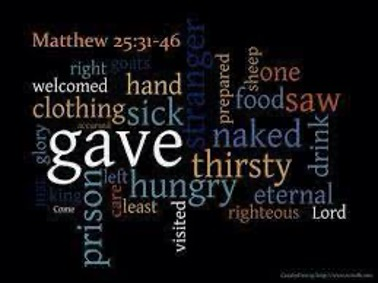
For I was hungry and you gave me something to eat, I was thirsty and you gave me something to drink, I was a stranger and you invited me in, I needed clothes and you clothed me, I was sick and you looked after me, I was in prison and you came to visit me.’
Then the righteous will answer him, 'Lord when did we see you hungry and feed you, or thirsty and give you something to drink? When did we see you a stranger and invite you in, or needing clothes and clothe you? When did we see you sick or in prison and go to visit you?
The King will reply, 'Truly I tell you, whatever you did for one of the least of these brothers and sisters of mine, you did for me.'
Matthew 25 contains one of my favorite passages, often referred to as "The Sheep and the Goats." In this section, Jesus presents a clear message about how we are to treat those who are marginalized in society. He emphasizes that serving the needs of others is central to living out our faith.
What stands out most is that the sheep described in this parable served God by caring for others without seeking recognition or realizing they were doing anything extraordinary. Their actions were motivated not by a desire for praise, but by a genuine commitment to do what was right and necessary. This is the standard for all who profess Jesus as their master: to serve others simply because it is the calling of Christ.
Let us strive to live our lives in such a way that, when we stand before the Lord in judgement, we will be welcomed into God's presence. This invitation comes because we have served God faithfully through meeting the needs of others, embodying the spirit of Christ in our actions every day.
For I was hungry and you gave me something to eat, I was thirsty and you gave me something to drink, I was a stranger and you invited me in, I needed clothes and you clothed me, I was sick and you looked after me, I was in prison and you came to visit me.’
Then the righteous will answer him, 'Lord when did we see you hungry and feed you, or thirsty and give you something to drink? When did we see you a stranger and invite you in, or needing clothes and clothe you? When did we see you sick or in prison and go to visit you?
The King will reply, 'Truly I tell you, whatever you did for one of the least of these brothers and sisters of mine, you did for me.'
Matthew 25 contains one of my favorite passages, often referred to as "The Sheep and the Goats." In this section, Jesus presents a clear message about how we are to treat those who are marginalized in society. He emphasizes that serving the needs of others is central to living out our faith.
What stands out most is that the sheep described in this parable served God by caring for others without seeking recognition or realizing they were doing anything extraordinary. Their actions were motivated not by a desire for praise, but by a genuine commitment to do what was right and necessary. This is the standard for all who profess Jesus as their master: to serve others simply because it is the calling of Christ.
Let us strive to live our lives in such a way that, when we stand before the Lord in judgement, we will be welcomed into God's presence. This invitation comes because we have served God faithfully through meeting the needs of others, embodying the spirit of Christ in our actions every day.

Philippians 2:3
Do nothing out of selfish ambition or vain conceit. Rather, in humility value others above yourselves,
The evil present in our world encourages us to embrace greed and selfishness. Society often promotes the belief that we must prioritize our own needs above all else, leaving little room to genuinely care for others. This mindset suggests that the struggles and needs of others are theirs alone to manage, and that our main concern should be our own advancement. In such an environment, true joy is elusive, as life becomes an endless pursuit of personal goals and achievements. The constant glorification of our own accomplishments, even when it comes at the expense of others, only reinforces this cycle of self-importance.
Jesus taught a radically different message, which Paul continued to spread. The good news was not about self-promotion, but about becoming servants first. Jesus exemplified this through His life, and ultimately, through His death on the cross. We are called to embrace humility, putting the needs of others before our own. It is in this act of valuing others above ourselves that we truly live into our purpose and reflect what we were created to be.
Do nothing out of selfish ambition or vain conceit. Rather, in humility value others above yourselves,
The evil present in our world encourages us to embrace greed and selfishness. Society often promotes the belief that we must prioritize our own needs above all else, leaving little room to genuinely care for others. This mindset suggests that the struggles and needs of others are theirs alone to manage, and that our main concern should be our own advancement. In such an environment, true joy is elusive, as life becomes an endless pursuit of personal goals and achievements. The constant glorification of our own accomplishments, even when it comes at the expense of others, only reinforces this cycle of self-importance.
Jesus taught a radically different message, which Paul continued to spread. The good news was not about self-promotion, but about becoming servants first. Jesus exemplified this through His life, and ultimately, through His death on the cross. We are called to embrace humility, putting the needs of others before our own. It is in this act of valuing others above ourselves that we truly live into our purpose and reflect what we were created to be.
