

Psalm 115:5 (ESV)
For you have been called to live in freedom, my brothers and sisters. But don’t use your freedom to satisfy your sinful nature. Instead, use your freedom to serve one another in love.
True Freedom and Christian Responsibility
As we celebrate our country’s 250th birthday, it is essential to reflect on the source of true freedom. All people are created by God and, as a result, are inherently worthy of respect and dignity. This promise is assured by God through Jesus Christ. Throughout the Gospels and continuing through the rest of the New Testament, God’s plan of loving salvation extends to both Jew and gentile, affirming that no person is excluded from God’s justifying grace.
Let us, as Christians, remember that we are commanded to love our neighbors. Importantly, our neighbor is not limited only to those who agree with us. The call to love extends to everyone, regardless of differences. In living out this command, we discover the Fruit of the Spirit.
As we nurture qualities such as love, joy, peace, patience, kindness, goodness, faithfulness, gentleness, and self-control, we grow into the individuals and community that God created us to be. Let us strive every day, through God’s love, to become more perfect followers of Christ.
For you have been called to live in freedom, my brothers and sisters. But don’t use your freedom to satisfy your sinful nature. Instead, use your freedom to serve one another in love.
True Freedom and Christian Responsibility
As we celebrate our country’s 250th birthday, it is essential to reflect on the source of true freedom. All people are created by God and, as a result, are inherently worthy of respect and dignity. This promise is assured by God through Jesus Christ. Throughout the Gospels and continuing through the rest of the New Testament, God’s plan of loving salvation extends to both Jew and gentile, affirming that no person is excluded from God’s justifying grace.
Let us, as Christians, remember that we are commanded to love our neighbors. Importantly, our neighbor is not limited only to those who agree with us. The call to love extends to everyone, regardless of differences. In living out this command, we discover the Fruit of the Spirit.
As we nurture qualities such as love, joy, peace, patience, kindness, goodness, faithfulness, gentleness, and self-control, we grow into the individuals and community that God created us to be. Let us strive every day, through God’s love, to become more perfect followers of Christ.

Matthew 22:37 – 40
37 Jesus replied: “‘Love the Lord your God with all your heart and with all your soul and with all your mind.’[c] 38 This is the first and greatest commandment. 39 And the second is like it: ‘Love your neighbor as yourself.’[d] 40 All the Law and the Prophets hang on these two commandments.”
When reflecting on Jesus’s words in Matthew 22:37–40, I am struck by the profound impact these two commandments could have on our world if we truly lived them out. Imagine how much better life would be if we allowed God’s love to flow through us to others, just as God pours His love into our lives.
Yet, loving God presents a challenge. We cannot see God, and this makes it difficult for us to know how to express our love for Him. Often, the love we try to offer is marked by selfishness and is transactional at best. This falls short of the agape love Jesus describes—a pure, unconditional love that expects nothing in return.
So, how do we love God? The answer lies in loving our neighbors. We demonstrate our love for God by placing the needs of others ahead of our own and acting for their benefit, not for what we might receive in return. This kind of love is rare today, as society often encourages us to compete for limited resources, including love itself. There is a fear that if we do not claim our share first, there may not be enough left for us.
But this thinking is flawed. Those who believe serve an infinite God, whose love knows no bounds. Because God’s love for us is limitless, we should never restrict our love for others. Only when we embrace this truth can we love others fully—and in doing so, fulfill the commandment to love God with all our heart, soul, and mind.
37 Jesus replied: “‘Love the Lord your God with all your heart and with all your soul and with all your mind.’[c] 38 This is the first and greatest commandment. 39 And the second is like it: ‘Love your neighbor as yourself.’[d] 40 All the Law and the Prophets hang on these two commandments.”
When reflecting on Jesus’s words in Matthew 22:37–40, I am struck by the profound impact these two commandments could have on our world if we truly lived them out. Imagine how much better life would be if we allowed God’s love to flow through us to others, just as God pours His love into our lives.
Yet, loving God presents a challenge. We cannot see God, and this makes it difficult for us to know how to express our love for Him. Often, the love we try to offer is marked by selfishness and is transactional at best. This falls short of the agape love Jesus describes—a pure, unconditional love that expects nothing in return.
So, how do we love God? The answer lies in loving our neighbors. We demonstrate our love for God by placing the needs of others ahead of our own and acting for their benefit, not for what we might receive in return. This kind of love is rare today, as society often encourages us to compete for limited resources, including love itself. There is a fear that if we do not claim our share first, there may not be enough left for us.
But this thinking is flawed. Those who believe serve an infinite God, whose love knows no bounds. Because God’s love for us is limitless, we should never restrict our love for others. Only when we embrace this truth can we love others fully—and in doing so, fulfill the commandment to love God with all our heart, soul, and mind.

James 4:6 (NIV)
6 But he gives us more grace. That is why Scripture says:
“God opposes the proud
but shows favor to the humble.”[c]
Grace: A Gift Received in Humility
The central message for us is clear: God’s grace is a free gift. It is not something we earn, nor is it something we could ever be worthy of through our own actions. Instead, grace is given to us out of God’s unconditional love. To fully embrace and experience this gift, we are called to approach God with humility. Rather than taking pride in what we have accomplished or earned, we are encouraged to be thankful for what God has generously provided. It is from this place of humility and gratitude that we discover true peace, recognizing and resting in the depth of God’s love for us.
6 But he gives us more grace. That is why Scripture says:
“God opposes the proud
but shows favor to the humble.”[c]
Grace: A Gift Received in Humility
The central message for us is clear: God’s grace is a free gift. It is not something we earn, nor is it something we could ever be worthy of through our own actions. Instead, grace is given to us out of God’s unconditional love. To fully embrace and experience this gift, we are called to approach God with humility. Rather than taking pride in what we have accomplished or earned, we are encouraged to be thankful for what God has generously provided. It is from this place of humility and gratitude that we discover true peace, recognizing and resting in the depth of God’s love for us.
Genesis 1:1 – 2
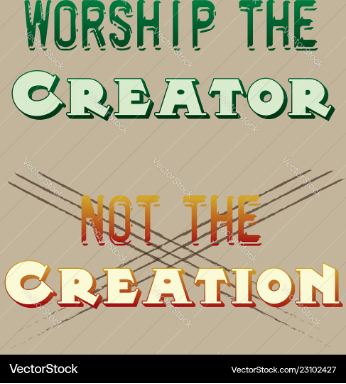
1 In the beginning God created the heavens and the earth. 2 Now the earth was formless and empty, darkness was over the surface of the deep, and the Spirit of God was hovering over the waters.
I have only included the first two verses of the creation story because it is too long to share here. But if you have the time, read all of Genesis Chapter 1.
The reason that I chose this for today is that we need to understand something. That creation by God did not end on the sixth day. My very first class for Course of Study the teacher talked about a creator God. I remember listening to him but not fully comprehending what he was saying. The reason for that is the same for most of us. We need to come to the realization that God continues to create every day. There is no limit to God’s creation because there is no limit to God. We as humans cannot understand this because we are finite beings.
Most of our earthly problems stem from the idea that there is a finite amount of everything, including the love and gifts of God. Nothing could be further from the truth. And because of this belief in limited supply we then are drawn to compete for that limited love and gifts. We then work to acquire more of these gifts and hoard them so when they do run out. Guaranteeing we then will still have ours when the supply runs out. But if we transition to a belief that God, being infinite, continues to create then we move past the need to accumulate and into the space of sharing. We then can give as God would want us too. Because there is no fear that we will run out. Only when we place our faith in an infinite God and God’s promise of love and grace can we see and live into what Jesus calls the Kingdom of Heaven. That peace comes not from the finite we can earn but to the infinite God can give. And with this, we know that God’s well will never run dry.
1 In the beginning God created the heavens and the earth. 2 Now the earth was formless and empty, darkness was over the surface of the deep, and the Spirit of God was hovering over the waters.
I have only included the first two verses of the creation story because it is too long to share here. But if you have the time, read all of Genesis Chapter 1.
The reason that I chose this for today is that we need to understand something. That creation by God did not end on the sixth day. My very first class for Course of Study the teacher talked about a creator God. I remember listening to him but not fully comprehending what he was saying. The reason for that is the same for most of us. We need to come to the realization that God continues to create every day. There is no limit to God’s creation because there is no limit to God. We as humans cannot understand this because we are finite beings.
Most of our earthly problems stem from the idea that there is a finite amount of everything, including the love and gifts of God. Nothing could be further from the truth. And because of this belief in limited supply we then are drawn to compete for that limited love and gifts. We then work to acquire more of these gifts and hoard them so when they do run out. Guaranteeing we then will still have ours when the supply runs out. But if we transition to a belief that God, being infinite, continues to create then we move past the need to accumulate and into the space of sharing. We then can give as God would want us too. Because there is no fear that we will run out. Only when we place our faith in an infinite God and God’s promise of love and grace can we see and live into what Jesus calls the Kingdom of Heaven. That peace comes not from the finite we can earn but to the infinite God can give. And with this, we know that God’s well will never run dry.
